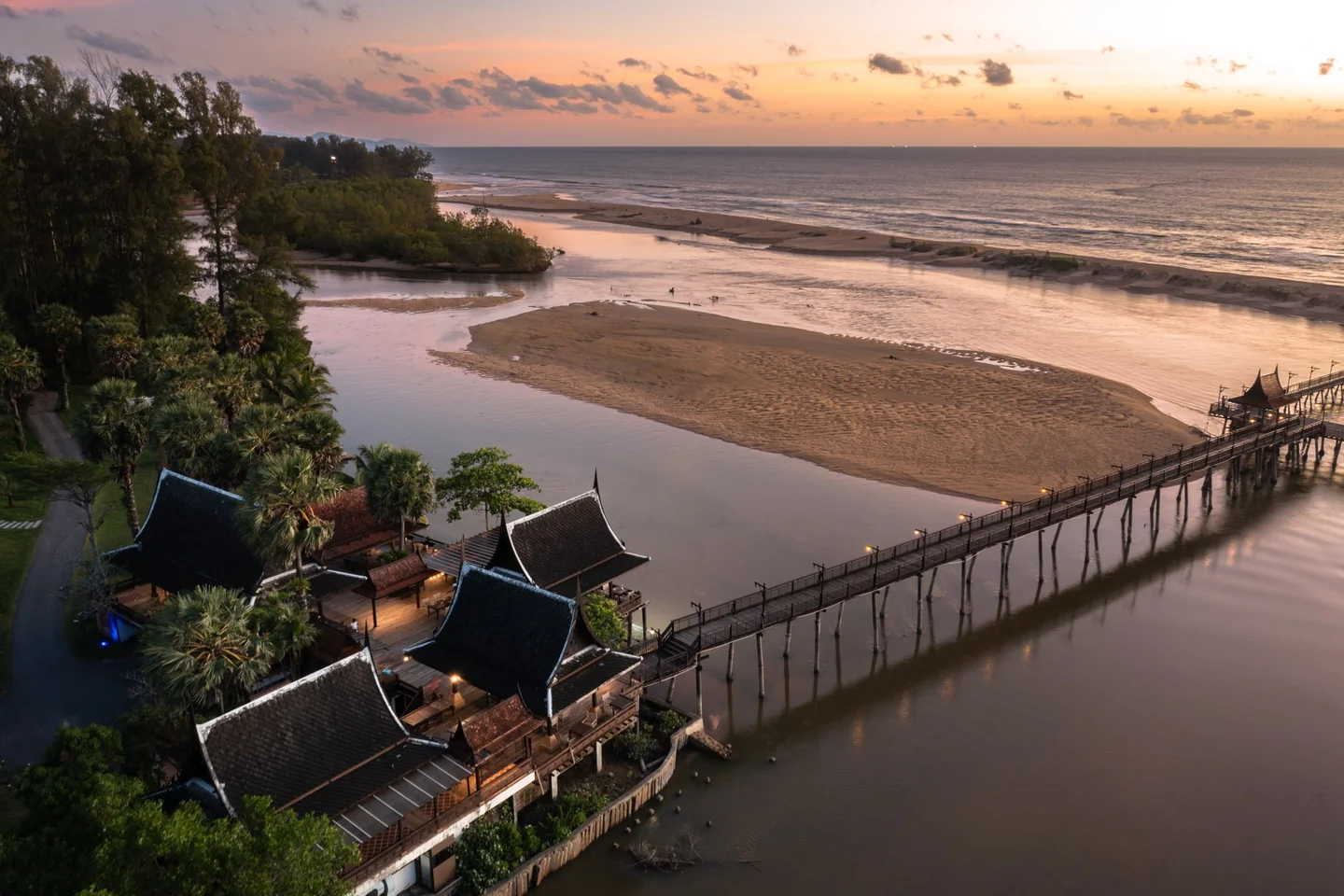
Natai Beach suits travellers who want the Andaman coast without building every day around traffic, nightlife or a long list of attractions. It is in Phang Nga, north of Phuket, and feels more resort-centred than the busier beach districts on Phuket Island.
That quieter setting comes with a trade-off. You gain space for slow mornings and resort time, but have fewer shops, restaurants and evening venues within easy reach. This Natai Beach travel guide covers that choice honestly, along with seasonal weather, airport access, stay length and accommodation planning.
Where is Natai Beach?
Natai Beach lies on the west coast of Phang Nga province, facing the Andaman Sea. It is reached by road from Phuket and mainland Phang Nga. The Hotspring Beach Resort & Spa identifies its location as Natai Beach, Phang Nga, and lists a mainland address in Na Toey, Thai Mueang District.
The nearest widely used air gateway is Phuket International Airport. From the airport, travellers continue by road. The actual journey time depends on the exact hotel, traffic, road conditions and weather, so confirm a transfer estimate with the property rather than relying on one fixed number from a booking site.
If you arrive late, arrange transport before the flight. A resort transfer or pre-booked car removes the need to compare options after landing. Ask the hotel where the driver will wait and which number to call if the flight is delayed. The resort’s contact page is the right place to verify current arrangements.
What should you expect from Natai Beach?
Expect a quieter beach base, not a miniature version of Patong. The area is better suited to people who are content spending time at their resort, walking when conditions allow, eating onsite or travelling by car for plans elsewhere.
Quiet does not mean silent or private. Other guests, local activity, maintenance, weather and seasonal demand all affect the atmosphere. Beach width and appearance can also change with tide and recent weather.
The sea deserves respect throughout the year. Check local flags and staff advice before swimming. During the wetter southwest-monsoon period, rougher water, stronger wind and thunderstorms can interrupt beach plans. Even in a generally favourable month, a single day can be unsuitable for swimming.
When is the best time to visit Natai Beach?
There is no month that guarantees sunshine, but the year has a useful broad pattern.
November to April: generally more favourable for beach plans
Tourism Authority of Thailand guidance for Phuket and Phang Nga identifies November through April as the more favourable period for sea activities in Phang Nga. Travellers often choose these months for a better chance of settled beach weather.
This is also a popular travel period. Room availability and rates may tighten around holidays, and the quieter coast can feel busier than usual. Book early if room type matters, then check the current forecast near departure.
May to October: wetter and more changeable
The southwest monsoon generally brings more rain and rougher Andaman-sea conditions from around May into October. A rainy-season stay can still include bright periods, warm weather and quieter resort time. It simply needs a stronger indoor backup plan.
Do not read «rainy season» as constant rain. Nor should you read a sunny morning as proof that the sea will remain calm all day. The Thai Meteorological Department’s southern west-coast forecast provides current rain, wind and wave information for the region.
For lower-season travel, pack a light rain layer, shoes with grip and enough flexibility to move a beach walk or day trip. Follow red flags and local warnings without trying to salvage a swim.
Transition months require a fresh forecast
Seasonal boundaries are approximate. Monsoon timing and rainfall vary by year. November can still be wet, while a week in the wetter season can include long dry intervals.
Choose dates based on your tolerance for uncertainty. If daily sea swimming is essential, favour the generally drier period but accept that weather still changes. If you mainly want a quiet hotel stay and do not mind indoor time, a wetter month may work.
How long should you stay?
Two nights can be enough for a resort-led break: arrival, one full day and an unhurried departure. Three or four nights give weather more room to move and make it easier to add a half-day or full-day outing without losing the quiet part of the trip.
Stay longer if you plan to use Natai as a base for Phang Nga. Travel times, attraction schedules and marine conditions need to be checked for each trip. Avoid stacking a boat excursion, a viewpoint sunrise and a long airport transfer into consecutive days unless that pace suits you.
A one-night stay can work after a late arrival or before a flight, but it leaves little margin for weather or check-in timing. Choose it for convenience rather than expecting a complete beach holiday.
Who is Natai Beach good for?
Natai works well for couples who prefer long meals and resort time to nightlife. Families may appreciate a contained hotel base, provided the selected room and facilities suit the children’s ages. Solo travellers who enjoy quiet and are comfortable arranging transport can also settle in easily.
It is less convenient for somebody who wants to walk out each night and choose among dozens of bars or restaurants. Travellers who dislike pre-arranging transport may find Phuket’s larger resort areas easier.
Ask whether you want the hotel to be a central part of the trip. If yes, Natai makes sense. If the room is mainly a place to sleep between activities, another base may fit better.
How to choose where to stay
Start with location and daily routine, then choose the room. The Hotspring Beach Resort & Spa is a beachfront property with a natural hot spring and cold plunge among its listed facilities. That combination suits a trip built around the property rather than daily commuting.
The resort’s accommodation page lists garden and sea-view rooms, pool-access categories, suites and villas. Availability, occupancy and exact features vary by category. Open the current page for each shortlisted room rather than assuming that a feature shown for one villa applies to another.
Choose a standard room when the resort is the destination
A room or suite may be enough when you expect to spend most waking hours at the beach, pools, restaurants or spa. Compare bed setup, view, bathroom and access rather than paying for private facilities you may barely use.
Consider pool access for easy daytime use
Pool-access rooms can suit guests who like moving between the room and water during the day. Ask about privacy, child supervision, access rules and whether the layout works for your group.
Choose a villa for private downtime
A villa may suit a couple or family planning more time behind their own door. Verify the type of pool or bathing facility, who can use it, and what is included. The words «pool villa» and «hot spring pool villa» should not be treated as interchangeable.
Dining and everyday logistics
A quiet beach area rewards basic planning. Decide whether you are happy eating mainly at the resort and how often you want transport elsewhere.
The hotel’s restaurant page lists Thai and international dishes, Southern Thai food, seafood and several venues. Operating hours and venue availability can change, so check what will be open during your stay. Discuss allergies and dietary requirements directly with restaurant staff.
Carry small essentials rather than assuming every item is a short walk away. Ask about nearby shops, pharmacy access and transport before you need them. If you plan to work remotely, confirm the room setup and current internet arrangements for the exact category.
What can you do besides sit on the beach?
At a resort, a slow day may include the hot spring and cold plunge, a spa appointment, the fitness room, a long meal and a walk when the weather is suitable. Review the hotel’s current facilities before booking, especially if one activity matters to the trip.
For excursions, Phang Nga has marine, landscape and cultural attractions, but conditions and operating calendars vary. Use official attraction or park information when planning. Sea trips can be cancelled for safety even when the weather looks acceptable from shore.
Keep one unassigned half-day. It can absorb rain, travel fatigue or an unexpectedly good afternoon by the water.
Natai Beach packing list
Bring sun protection, swimwear, sandals with grip and a light layer for air-conditioned rooms. Add a compact rain jacket or umbrella outside the generally drier months. A waterproof pouch is useful near the beach and during sudden showers.
Pack medication and personal essentials in quantities that cover the stay. If you plan to use hot or cold pools, bring a dry change of clothes and check whether personal health circumstances require medical advice first.
Do not forget the practical items: transfer confirmation, hotel contact details, current forecast and travel insurance information.
Is Natai Beach better than Phuket?
They solve different travel problems. Natai gives you a quieter mainland base with a stronger resort focus. Phuket offers far more variation between beach districts, plus a larger range of restaurants, shops, nightlife and activities.
Phuket also has quiet areas, so the comparison is not simply calm versus crowded. Decide how much choice you want outside the hotel and how often you are willing to travel for it.
Final planning checklist
Before paying, verify the exact room features, occupancy and cancellation terms. Confirm airport transport, current restaurant and facility schedules, and any service that needs an appointment.
A few days before arrival, check the TMD forecast and ask the resort about sea or weather conditions if they may affect your plans. Keep the first day light in case the transfer takes longer than expected.
Natai Beach works best when you make peace with doing less. Pick a hotel you genuinely want to spend time in, arrange the practical details early, and leave enough room for the coast to set the pace.